

No colleges match “”. Press Enter to search anyway.

Bachelor of Science [BS] (Biomedical Science and Technology)

at IIT Guwahati - Indian Institute of Technology - [IITG]

list_alt All courses

Fees

Fees at IIT Guwahati for the Bachelor of Technology (B.Tech) in Artificial Intelligence & Data Science program are structured on a per-semester basis. The tuition fee is Rs. 100,000 per semester, while hostel fees range from Rs. 32,000 to Rs. 35,000 per semester. Additional fees, which include mess and miscellaneous expenses, bring the total semester fee to between Rs. 130,000 and Rs. 133,000. Scholarships significantly reduce costs based on parental income and category.

For those whose family income is less than Rs. 5,00,000, tuition can be reduced to Rs. 33,000 per semester, and those with income below Rs. 1,00,000 may receive a complete tuition waiver. Reserved category students have discounted or waived tuition fees. Furthermore, initial expenses include a registration fee of Rs. 500 and an entrance exam fee of Rs. 2,000. Various scholarships such as the Merit-cum-Means (MCM) Scholarship provide additional financial aid options.
Eligibility

Admission to the B.S. in Biomedical Science and Technology at IIT Guwahati is entrance-based: candidates need to have completed Class 12 with the science subjects the programme expects, particularly physics, chemistry and mathematics, and are admitted on the basis of rank secured in the national engineering entrance test that IIT Guwahati accepts for its undergraduate programmes. Class 12 marks alone are not sufficient; it is the entrance rank that decides admission, and the qualifying criteria and cut-off rank for a given category are declared afresh for each admission cycle by the conducting authority and the institute, so applicants should check the current year's cut-off rather than a previous one.

About Bachelor of Science [BS] (Biomedical Science and Technology)

The Bachelor of Science in Biomedical Science and Technology at IIT Guwahati in Guwahati, Assam is an undergraduate programme that sits at the meeting point of biology, engineering and technology, built for students who want to understand living systems well enough to design the instruments, devices and diagnostic tools used in medicine and healthcare rather than only study biology on its own. The coursework typically moves from foundational science and mathematics in the early years into subjects such as physiology, biomaterials, medical instrumentation and biomedical signal processing, supported by laboratory work that lets students handle the kind of equipment used in hospitals and research labs. It suits students who did well in the sciences at the school level and want a technology-facing career in healthcare rather than a purely clinical one, and it also opens a path into further postgraduate study or research in biomedical engineering, medical devices or related applied sciences. Graduates typically move into roles connected with medical device design, healthcare technology, diagnostics or further specialised study rather than direct patient care, since the training is technical rather than clinical. Anyone considering the programme should be clear that it trains engineers and scientists working on health-related technology, not doctors. The total number of seats the institute sanctions for this programme each year is fixed by the admitting authority and divided across the categories and quotas that apply under the applicable reservation rules, and the current category-wise matrix is the one published in that year's admission round, not a figure carried over from an earlier one.

Pages related to what you are reading, built from the same college data.

Mobile app

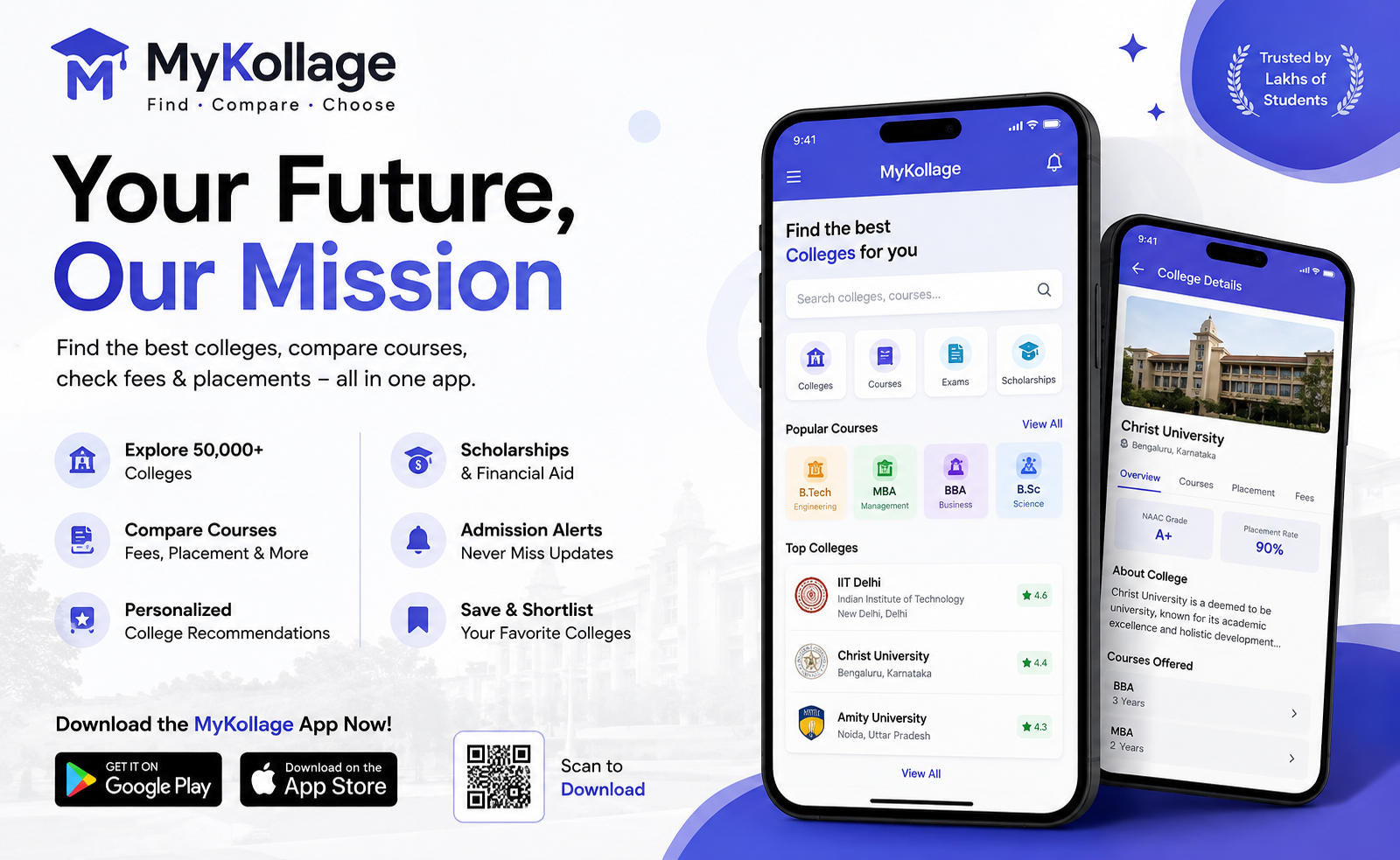
Get the MyKollege app

Colleges, cut-offs, exam dates and admission alerts — in your pocket.

  • Admission alerts
  • Cut-off predictor
  • Compare colleges
Admissions Assistance
school
1-on-1 College Shortlisting
verified_user
Real Cutoff & Fees Check
security
Zero Spam Guarantee
20,309+ Colleges
442+ Exams
3,543+ Scholarships